The Charity Shop Whisperer: How to Spot a £5 Eames Era Chair Among the Rubbish
I'll never forget the time I found a genuine 1960s G-Plan sideboard sitting between a broken treadmill and a box of Reader's Digest condensed books. It was priced at £12. Twelve quid. I had to sit down on a nearby beanbag—also for sale, £3—to catch my breath. The thing is, charity shop hunting isn't just luck. Well, it's partly luck.
But after fifteen years of Saturday mornings spent rummaging through other people's cast-offs, you start to notice patterns. The way quality furniture sounds when you knock on it. The particular weight of a solid teak drawer. The tell-tale signs that something's been well-made rather than merely assembled.
The chair you're looking for—the one that makes your heart skip—is probably buried under a pile of mismatched cushions right now. Here's how to find it.
The Friday Afternoon Theory
Most charity shops restock for the weekend. It's not universal, but I've found that Friday afternoons or early Saturday mornings offer the best hunting grounds. The weekend warriors haven't descended yet, and the week's donations are freshly priced and shelved. I've had my best finds at 9:15 on a drizzly Saturday when sensible people are still having their second cuppa.
Go regularly. This is the real secret. Not once a month when you remember. Pop in weekly, even if it's just for ten minutes. You learn the rhythm of each shop. Some price high and negotiate; others mark everything to shift quickly. Some have a "furniture corner" that's actually worth investigating; others dump everything in a chaotic heap that rewards the patient.
What to Actually Look For
The Knock Test
Solid wood sounds different. When you tap a genuine mid-century teak chair, you get a resonant, warm tone. Hollow MDF or chipboard gives a flat, dead thud. It's subtle, but once you know it, you can't un-know it. I do this discreetly—no need to look like you're performing percussion in Oxfam.
The Weight Check
Quality vintage furniture has heft. A proper 1960s dining chair will feel surprisingly heavy for its size. Pick it up (carefully—check for wobbles first). If it feels substantial, investigate further. If it's lighter than your shopping bag, it's probably modern flat-pack in disguise.
The Drawer Test
Pull out a drawer if there is one. Dovetail joints—those interlocking triangular wedges—indicate hand-finished construction. They're a pain to fake properly and expensive to machine. Modern furniture uses metal runners and stapled corners. Run your finger along the inside corner of a drawer front; if you feel the interlocking pattern, you're likely onto something older and better made.
The Patina Patrol
Look for honest wear. A genuine vintage piece will have scratches, water rings, perhaps a bit of sun fading on the top surface. This is good. It means it's real. Be suspicious of "vintage style" pieces that look artificially distressed—too uniform, too deliberate. Real age is random and tells a story.
Specific Pieces to Hunt For
The Eames Era Chair (that isn't actually Eames by the way)
You're not likely to find a genuine Charles and Ray Eames lounge chair for a fiver. Sorry. But you will find chairs from their era—the 1950s through 1970s—that share the same design philosophy. Look for:
• Fibreglass shell chairs: Often unmarked, these have that distinctive curved seat shape. They might be by Herman Miller (if you're incredibly lucky), but more likely they're British-made equivalents from companies like Race Furniture or even good-quality imports. Check underneath for stamps or labels.
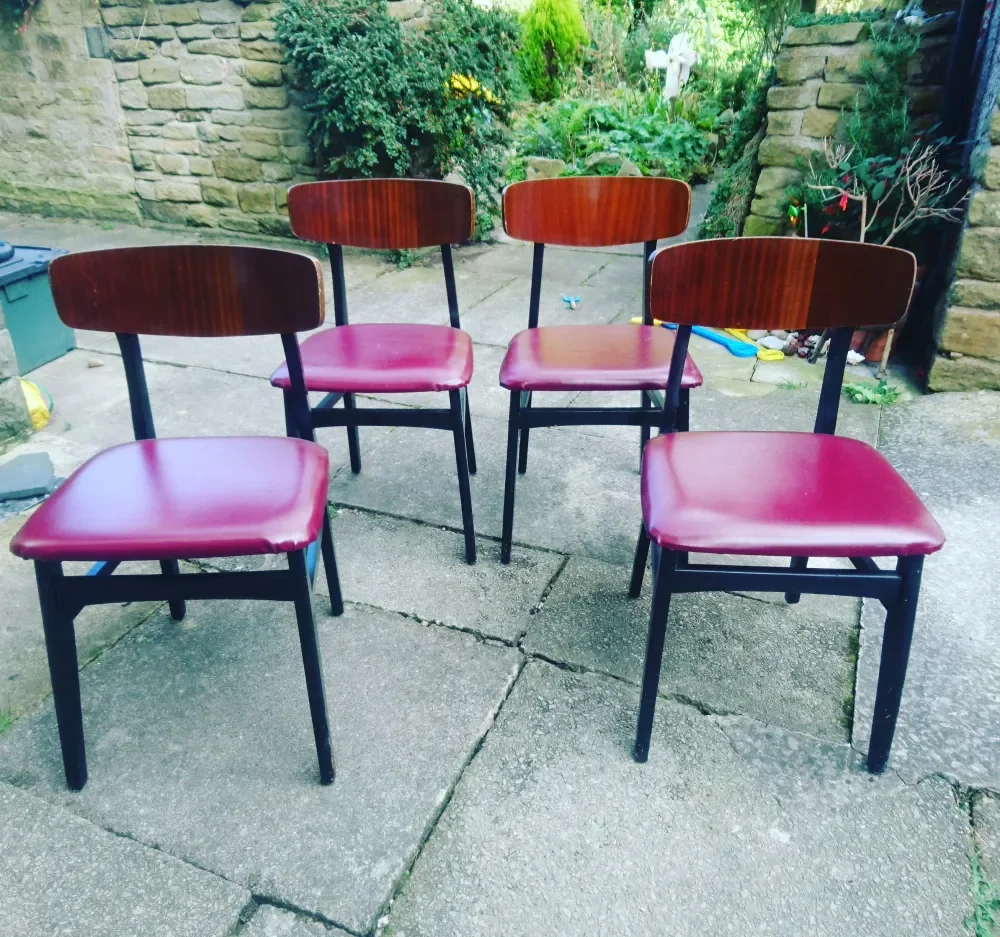
• Bent plywood chairs: The technology Eames pioneered became widespread. Look for smooth, curved wooden seats and backs, often with metal legs. If it's comfortable and the wood feels warm and solid, it's worth a second look.
• Tubular steel frames: Chrome or black metal frames with canvas or leather sling seats. These were everywhere in the 1960s and 70s. Even unmarked ones can be excellent quality.
The G-Plan Goldmine
British mid-century at its finest. G-Plan furniture from the 1960s and 70s is distinctive: teak or afromosia wood, clean lines, often with those characteristic tapered legs. Look for the red label inside drawers or stamped on the back. Even unmarked G-Plan has a particular look—substantial, well-proportioned, slightly Scandinavian in influence but unmistakably British in execution.
The Danish Dark Horse
Actual Danish design from the likes of Hans Wegner or Arne Jacobsen is rare and usually priced accordingly in charity shops (if they know what they've got). But Danish-style pieces—often made in the UK or Yugoslavia in the 1970s—turn up regularly. Look for:
• Teak or rosewood (dark, rich, fragrant when you open a drawer)
• Tapered legs, often splayed outward
• Minimalist handles or push-to-open mechanisms
• Floating appearance—cabinets that seem to hover on their legs
The Pricing Peculiarities
Charity shop pricing is wildly inconsistent. I've seen 1980s chipboard desks priced at £45 because they're "old looking," and genuine 1960s teak sideboards at £15 because someone thought brown furniture was out of fashion. This is your opportunity.
Red flags that suggest under-pricing:
• Dusty, unloved appearance (easily cleaned)
• Mismatched handles (easily replaced)
• Minor veneer chips (repairable or ignorable)
• Simply being brown (brown is coming back, but not everyone's got the memo)
Green flags that suggest over-pricing:
• "Mid-century modern" written on the price tag (they know)
• Perfect condition (suspicious—might be reproduction)
• Trendy styling in the display (they're marketing it)
Don't be afraid to ask if they'll take less, especially late in the day or if something's been sitting for weeks. Charity shops want turnover. A £10 sale today beats a £15 sale that never happens.
What to Avoid (Even at £5)
The Wobbly Death Trap
A bit of loose joinery is fixable. A chair that rocks alarmingly when you sit in it might be structurally compromised. Check the legs—if they're loose at the seat attachment point, and you can see gaps or split wood, walk away. Unless you're genuinely handy with woodwork, some repairs aren't worth the hassle.
The Over-Restored Ruin
Beware of pieces that have been "done up" badly. Thick, gloopy varnish that obscures the wood grain. New handles that don't suit the proportions. Paint slapped over beautiful teak because someone thought "shabby chic" was the only option. You can't easily undo these things.
The Modern Repro in Disguise
Some contemporary furniture mimics mid-century styles. Check underneath and inside. Modern pieces often have:
• Uniform, machine-perfect construction
• Staples and screws rather than joints
• Synthetic materials that smell plasticky when you open a drawer
• Made in China/Malaysia/Vietnam labels (not definitive, but a clue)
The Practical Bits
What to bring:
• A tape measure (sounds obvious, but I've bought things that didn't fit through the door)
• Cash (some smaller shops still prefer it, and it helps with haggling)
• A friend with a car or a willingness to arrange delivery (that sideboard won't fit on the bus)
• Baby wipes (for checking what's dirt versus what's damage)
When to walk away:
If you're not sure, leave it. The charity shop ecosystem is forgiving—there will be other chairs. I've regretted purchases far more than missed opportunities. Sleep on it if possible. If you're still thinking about it at 11pm, go back first thing.
The Thrill of the Find
There's something particular about charity shop hunting that beats even the best curated vintage fair. It's the democracy of it—the possibility that anyone, on any budget, might find something extraordinary.
I've seen students furnish entire flats for under £100. I've seen retirees finally get the sideboard they remember from their parents' house. I've seen dealers who should know better walk right past treasures because they were looking for labels rather than quality.
The £5 Eames era chair exists. I've found three in the last five years. Two stayed with me; one went to a friend who needed it more. They're out there, buried under the duvet covers and the broken electricals and the novels nobody wanted to finish.
You just need to know how to look.
Found something brilliant in a charity shop recently? We'd love to hear about it—drop us a line or tag us in your finds. And if you're looking to skip the hunt and go straight to the good stuff, our latest arrivals are always worth a browse.
Next up: Car Boot Confidential: A 6am Survival Guide for Vintage Hunters